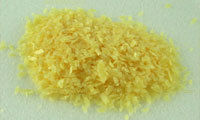
Polyethylene Wax About
| Company | Origin | Grade | Packing | Form |
| Honeywell | U.S.A | AC 8 | 25Kg | Prills & Powder |
| Honeywell | U.S.A | AC 9 | 25Kg | Prills & Powder |
| Honeywell | U.S.A | AC 16 | 25Kg | Prills & Powder |
| Honeywell | U.S.A | AC 656 | 25Kg | Prills & Powder |
| Honeywell | U.S.A | AC 680 | 25Kg | Prills & Powder |
| Honeywell | U.S.A | AC 629 | 25Kg | Prills & Powder |
| Honeywell | U.S.A | AC 671 A | 25KGS | Prills & Powder |
| Innospecs | Germany | LE -113 | 25Kg | Granules |
| Innospecs | Germany | LE -114 | 25Kg | Granules |
| Innospecs | Germany | LE -115 | 25Kg | Granules |
| Innospecs | Germany | LE- 116 | 25Kg | Granules |
| Innospecs | Germany | LE -253 | 25Kg | Granules |
| Innospecs | Germany | LE -262 | 25Kg | Granules |
| Innospecs | - | LE-453 | 25KGS | Granules |
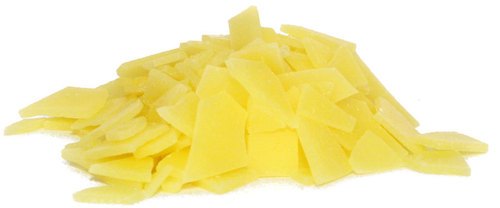
| Innospecs | Korea |
| 20Kg | Flakes |
Versatile Industrial ApplicationsPolyethylene Wax serves as an exceptional processing aid in manufacturing industries, particularly for plastics and rubber. Its versatility extends to usage as a lubricant in extrusion and injection molding, dispersing agent, and surface modifier, enhancing product quality and efficiency across various industrial operations.
High Purity and StabilityWith a remarkable purity of 99% and minimal oil content, this synthetic wax ensures high performance and consistency. Its thermal stability, marked by a flash point above 300C, and insolubility in water, guarantee reliable results even in demanding processing environments.
FAQs of Polyethylene Wax:
Q: How is Polyethylene Wax typically used in industrial manufacturing?
A: Polyethylene Wax is primarily used as a lubricant in extrusion and injection molding, as well as a dispersing agent and surface modifier. It helps improve processing efficiency, reduces friction, and enhances the quality and appearance of the final product.
Q: What makes Polyethylene Wax compatible with most plastics and elastomers?
A: Its synthetic nature, neutral acidity, and specific molecular structure allow Polyethylene Wax to blend seamlessly with a wide variety of plastics and elastomers, facilitating improved dispersion and mechanical properties without affecting material integrity.
Q: Where should Polyethylene Wax be stored for optimal shelf life?
A: To maintain its quality and extend shelf life up to two years, Polyethylene Wax should be stored in a cool, dry place away from direct sunlight or moisture, preferably in its original 25 kg bag packaging.
Q: When should I use Polyethylene Wax in the plastic manufacturing process?
A: Polyethylene Wax should be incorporated during the initial stages of plastic processing, such as pre-mixing or compounding, to ensure optimal lubricity, dispersion, and modification of surface properties throughout extrusion or injection molding.
Q: What benefits does Polyethylene Wax provide during processing?
A: The addition of Polyethylene Wax offers improved flow characteristics, reduced fusion time, minimized sticking issues, and enhanced gloss or surface finish, leading to smoother processing and superior end-product quality.
Q: How can Polyethylene Wax be applied for best results?
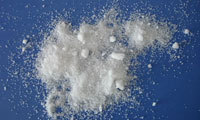
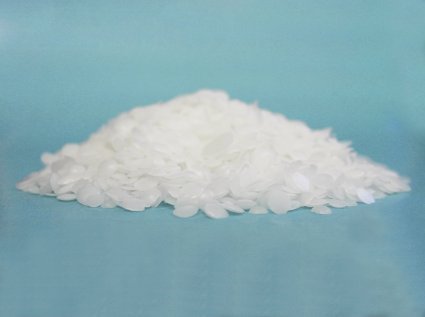
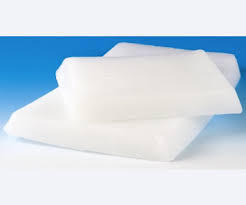
A: Depending on the formbeads or flakesPolyethylene Wax can be directly mixed into the resin or polymer batch. Uniform distribution during mixing ensures consistent effects as a lubricant, dispersing agent, or surface modifier in the final product.




 Send Inquiry


 Send Inquiry
